Built, not observed
Ran has spent 35+ years building production systems. His views on AI come from implementing them, breaking them and figuring out what survives contact with reality.
01Guest Foundry represents
Founder, author, and entrepreneur. Building AI that understands how companies actually work.

02The person behind the work
Ran Aroussi has spent decades building software systems used in finance, advertising, open source and, now, enterprise AI.
He is the creator of yfinance, the world’s most widely used open-source financial data libraries, with more than 50,000 GitHub stars and tens of millions of downloads each month. He also founded Automaze, a software engineering company that works with founders and businesses building complex products.
Today, Ran runs VarOps, where he is working on a problem he believes the AI industry has largely misdiagnosed: models are becoming extraordinarily capable, but inside companies they are still largely blind.
They can reason about the world, but they often don’t know why a decision was made six months ago, who is allowed to see what, which process is actually followed rather than documented, or what happened the last time the company tried something similar.
Ran calls the answer Resident AI: AI that lives inside the organization, continuously develops an understanding of how it operates, and works within its existing tools, permissions and workflows.
His work focuses on organizational memory, context engineering, local models, agent infrastructure and the gap between impressive AI demos and systems that can be trusted to operate inside real companies.
He's the author of two books on deploying AI responsibly to production environment.
On a podcast, Ran can go deep into architecture with engineers or zoom out with founders and executives to discuss what AI will actually change about how companies are built and run.
03Why hosts book Ran
Ran has spent 35+ years building production systems. His views on AI come from implementing them, breaking them and figuring out what survives contact with reality.
His core argument is simple: most enterprise AI problems are not intelligence problems. They are context problems.
He can unpack memory systems, local models and agent architecture for engineers, then explain why they matter to a CEO five minutes later.
The conversation is about what happens when AI becomes part of the operating fabric of a company, not another chatbot employees have to visit.
Guest Foundry shapes the premise around each show so the conversation starts somewhere relevant rather than with a generic founder biography.
Professional remote setup, straightforward scheduling, prepared assets and active promotion once the episode is live.
04Conversation starters
Companies keep buying smarter models when the real problem is that AI has almost no idea how the organization actually works. What happens when you fix the context instead of upgrading the model?
For AI builders and business leaders.
Most organizational knowledge never makes it into the documentation. It lives in decisions, exceptions, relationships and people’s heads. What would it take for a company to develop a memory of its own?
For founders and operations teams.
The first generation of workplace AI gave employees another app to visit. Resident AI flips the model: the AI should come to where the work already happens.
For executives and product leaders.
Ran replaced frontier models with local ones and found that surprisingly little broke. The lesson: intelligence and organizational understanding may belong in different layers.
For technical and enterprise AI audiences.
What changes when AI stops being a destination and becomes part of the company itself — observing, remembering, assisting and eventually acting?
For founders and the future-of-work audience.
A demo needs a model and a prompt. A production agent needs memory, permissions, observability, failure handling, governance and a way to know when it should not act.
For engineers and technology leaders.
Forget adding AI features to existing workflows. If you designed a company today around abundant machine intelligence, what would you build differently from day one?
For founders, executives and investors.
05On air
A selection of podcast conversations and interviews.
The New Dev Skill: Multi-Monitoring 10 Agents
Simplicity Is The Key For AI Adoption.
Vibe Coding, Real Consequences
When AI Decisions Go Wrong at Scale
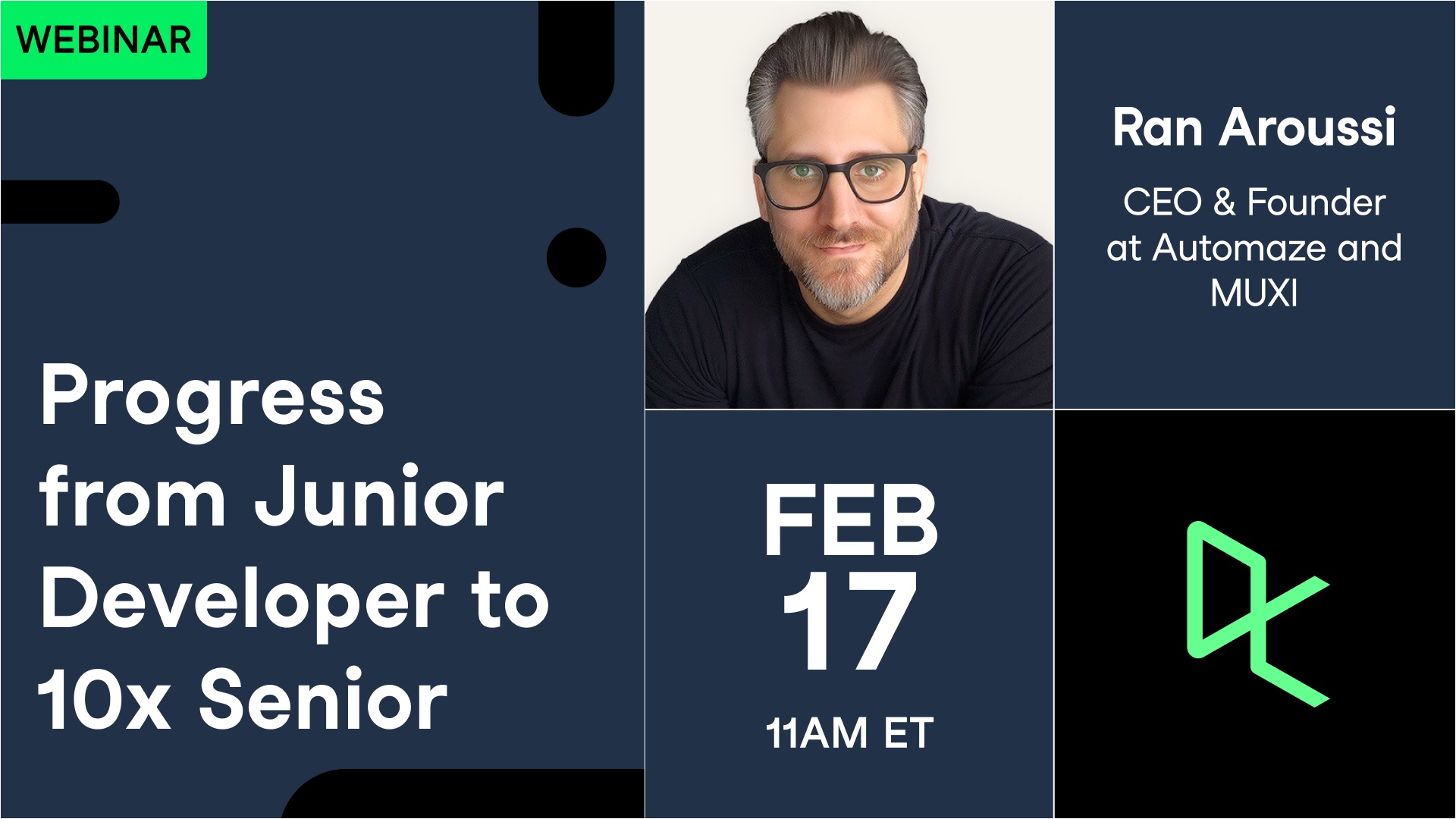
From Junior Developer to 10x Senior
Reality check every founder needs in 2026
06In print
Two books. Same thesis, different altitude.

01 / Publication

02 / Publication
07For producers
Portraits and bios for podcast artwork, show notes, event pages and promotion.

High-resolution asset pending
High-resolution asset pending

High-resolution asset pending
Name & title
Founder, VarOps & Automaze
Creator of yfinance
Ran Aroussi is the founder of VarOps and creator of yfinance, the open-source financial data library used by millions of developers. After 35+ years building production software, his current work focuses on Resident AI, organizational memory and what it takes to make agentic systems dependable inside real companies.
Ran Aroussi is the founder of VarOps and creator of yfinance, one of the world’s most widely used open-source financial data libraries. He has spent more than 35 years building production software across finance, advertising technology, open source and AI. At VarOps, he is developing Resident AI: systems that understand how a company actually operates and work within its existing tools, permissions and workflows. His work focuses on organizational memory, context engineering, local models and production-grade agents. Ran speaks about the gap between increasingly intelligent models and the organizational understanding they still lack.
Ran Aroussi is a software builder, entrepreneur and the founder of VarOps, where he is developing Resident AI: AI systems designed to understand how an organization actually works and operate within its existing tools, permissions and workflows.
He has spent more than 35 years building production software across financial technology, advertising infrastructure, open source and artificial intelligence. Ran is best known as the creator of yfinance, one of the world’s most widely used open-source financial data libraries, with more than 50,000 GitHub stars and tens of millions of monthly downloads.
His current work explores a problem he believes sits at the center of enterprise AI: models have become extremely intelligent, but they remain largely blind to the organizations in which they are expected to work. Documents and search systems capture only a fraction of what a company knows. Decisions, relationships, exceptions, permissions and unwritten practices make up the rest.
Through VarOps, Ran is working on organizational memory, context engineering and the infrastructure required for AI agents to operate reliably inside real companies. His broader thesis is that the next major leap in enterprise AI will come not simply from smarter models, but from systems that understand the environment around them.
Ran is also the founder of Automaze and the author of Production-Grade Agentic AI and Company-Scale Agentic AI. He speaks to technical and executive audiences about production AI, agent architecture, local models, organizational memory and what an AI-native company might actually look like.
08A starting point
09Audience fit
Best for audiences thinking seriously about what happens after the AI demo.
Resident AI, organizational memory, context engineering, agent infrastructure, local models, AI-native organizations, open source, software architecture and AI transformation.
10Start the conversation
Book Ran for a conversation about how AI changes when it has to work inside a real organization.